Knitting Gauge Explained: Why Tension Squares Matter and How to Measure Them
You have spent three weeks on a jumper. It comes off the needles looking neat, you try it on, and the sleeves reach your knuckles while the body fits a ten-year-old. The pattern was right, the yarn was right. What went wrong was tension: the quiet relationship between your needles, your yarn and your hands. It is the least glamorous part of knitting, and the one that decides whether the finished thing fits.
What tension actually measures
Tension, called gauge in American patterns, is how many stitches and rows fit into a given area of knitted fabric. Almost always that area is 10cm, or 4in in older and US patterns. A pattern might say: 22 stitches and 30 rows to 10cm over stocking stitch on 4mm needles.
Read that as a design instruction rather than a suggestion. Every shape decision in the pattern was calculated from those numbers: how wide the armhole opening is, where the shoulder seam sits, how many stitches the yoke increases across. Change the numbers and the shape changes with them.
The needle size is only a starting point. It is the designer's best guess at what an average knitter will need. You may not be average, and that is not a fault.
Why the same yarn knits differently in different hands
Two knitters can use identical yarn and identical needles and still produce fabric that differs by several stitches across 10cm. The reasons are ordinary: how you wrap the yarn, whether you pick or throw, how firmly you hold the working strand, even whether your needles are slippery metal or gripping wood.
It varies within one person, too. A tired evening produces tighter stitches than a relaxed afternoon, and caffeine, cold hands or a fiddly chart all leave their mark. Over a whole jumper those small differences add up to centimetres.
Yarn substitution adds another layer. Two yarns both labelled DK can be spun differently, plied differently, or blended with different fibres, and they will not knit to the same tension. The ball band gives a range, not a promise.
Knitting a tension square worth trusting
A swatch that is too small, or measured too soon, will lie to you. Done properly, it takes an evening.
- Cast on enough stitches. Aim for a square at least 15cm across, so the centre is undisturbed by edges. Multiply the pattern tension by 1.5: if it asks for 22 stitches to 10cm, cast on around 40.
- Work the right stitch pattern. Stocking stitch tension tells you nothing about a cable panel or a lace repeat. If the pattern gives separate tension for a patterned panel, swatch that as well.
- Knit enough rows to make the swatch roughly square, and note your needle size.
- Finish loosely. Cast off gently or slide the stitches onto a spare thread. A tight cast-off pulls the fabric in and spoils the measurement.
- Wash and block it the way you intend to treat the finished garment. Cotton can shrink, alpaca can relax and grow, superwash wool can behave differently again.
- Let it dry flat, without pins stretching it into a shape it will not hold.
Measuring without fooling yourself
Once the swatch is completely dry, lay it on a flat surface and leave it alone. No stretching, no pinning out, no smoothing it into a tidier version of itself.
- Use a rigid ruler or a plastic gauge window. A soft tape measure stretches and sags, which makes it exactly the wrong tool here.
- Keep away from the edges. Stocking stitch curls, and edge stitches are smaller and distorted.
- Place pins 10cm apart in the middle of the fabric, then count the whole stitches between them. Half stitches are not stitches; round to the nearest whole number.
- If the count does not land evenly, measure over 15cm and divide by 1.5, or over 5cm and multiply by two. A longer distance gives a more reliable answer.
- Measure in two or three places and take an average. Fabric is not perfectly uniform.
- Count rows the same way, following one straight column of stitches from bottom to top.
Write both numbers down before you forget them. Stitch tension decides width; row tension decides length and the depth of shaping.
Adjusting your needle size
Now compare your numbers with the pattern's. If you have fewer stitches than the pattern asks for, your stitches are too big, so go down a needle size. If you have more stitches, your stitches are too small, so go up a size.
One step is usually 0.25mm in metric sizes and changes tension by a modest amount, so expect to move two or three sizes if you are a long way out. Re-swatch after each change rather than guessing, and change one variable at a time; altering needle size and yarn together leaves you with no idea what caused the difference.
When stitch and row tension disagree
They often do. Matching stitch tension matters most, because it controls the width of every piece. If your row tension is off, you can usually compensate by working more or fewer rows to reach the stated length. Rows matter more in raglan shaping, circular yokes and anything where the pattern counts rows rather than centimetres.
When the numbers will not line up
If you have tried two or three needle sizes and still cannot match, stop fighting it and use the numbers you have. Multiply your stitches per centimetre by the finished measurement you want, and that gives you the number of stitches to cast on.
Suppose the pattern is written at 2.2 stitches per cm and you knit at 2.0. A size with 220 stitches across the bust would come out at 100cm as written, but 110cm in your hands. Choosing a size with around 200 stitches gives you roughly 100cm instead. It is simple arithmetic, and it usually works better than forcing a tension that will not come.
Two more things worth knowing. If you knit in the round, swatch in the round, because many knitters work purl stitches at a different tension from knit stitches and a flat swatch can mislead you. Cast on a small tube, or knit a few rounds and then work back and forth with the yarn carried loosely across the wrong side. And if the fabric you produce is denser or drapier than the pattern describes but you like
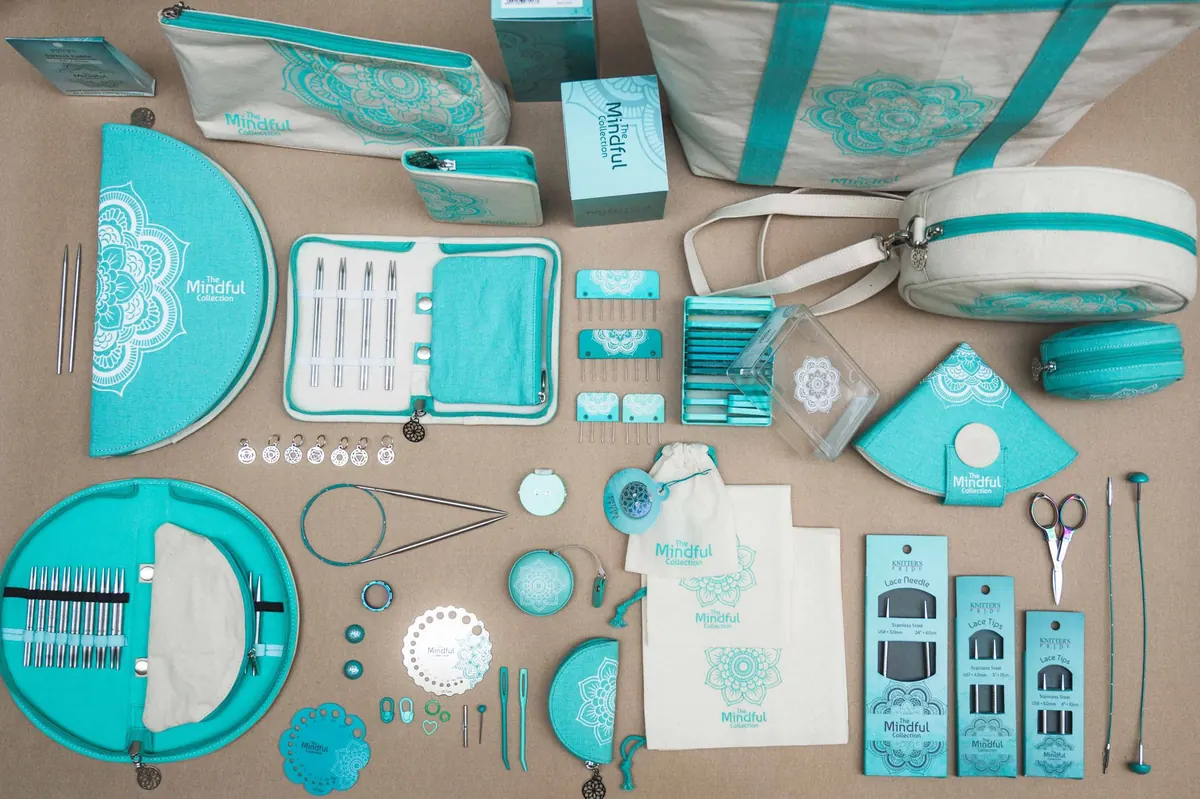
Photo: Knitters Pride / Pexels
Sewing with UK Charity Shop Finds: A Checklist for Upcycling Second-Hand Fabric
How to source, wash, unpick and store second-hand clothes and textiles from UK charity shops so they...
PDF Sewing Patterns vs Paper Patterns: Which Is Better for UK Sewists?
Weigh up cost, printing, storage, sizing and ease of use to decide whether PDF or paper sewing patterns...
About Us