Quilting for Beginners: How to Choose Fabric, Wadding and Thread for Your First Quilt
Your first quilt does not need perfect points or a designer colour palette. It needs fabric that behaves, wadding that suits the way you want to use it, and thread that will not snap halfway down a seam. Get those three right and the sewing becomes the easy part. Get them wrong and you will spend your evenings unpicking, which is a reliable way to fall out of love with quilting before you have finished the first block.
Here is what actually matters when you walk into a fabric shop for the first time.
Start with quilting cotton (and know why)
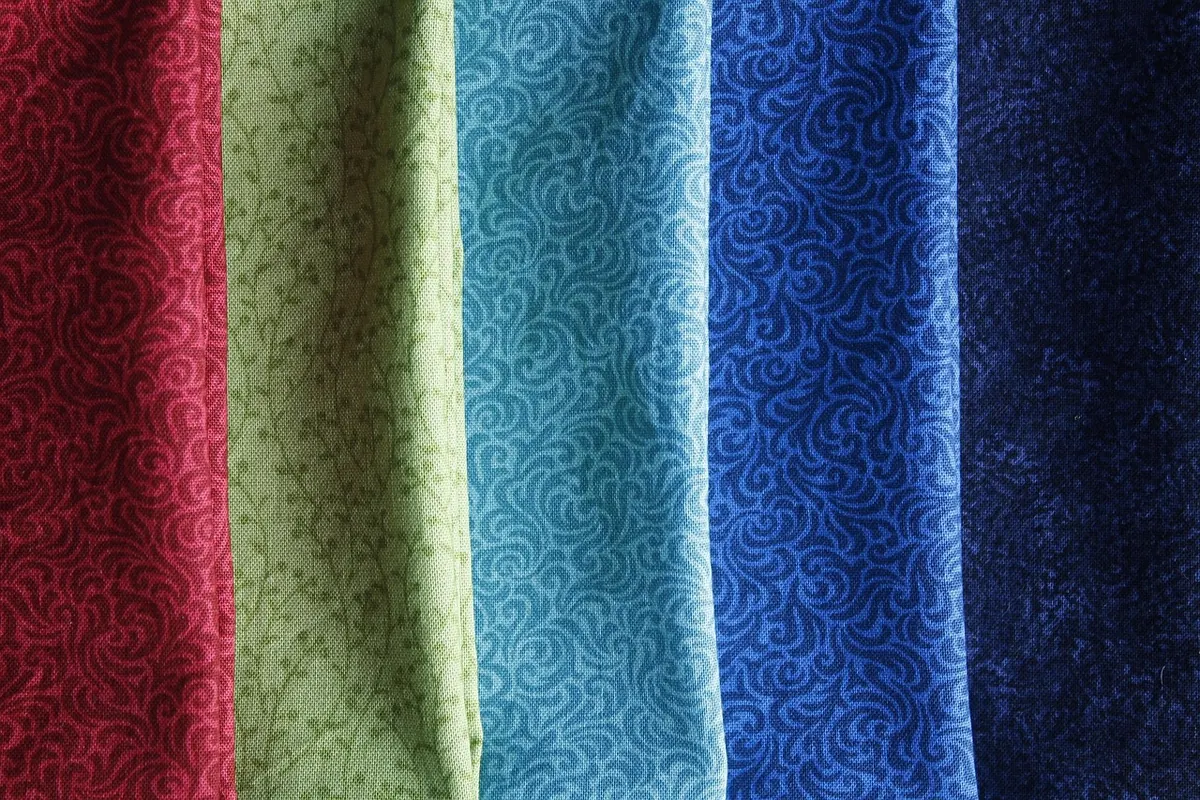
Quilting cotton is a plain-weave fabric, usually around 110–115cm wide, with a bit of body to it. That slight stiffness is a feature, not a fault: it presses crisply, holds a fold, and does not slip about under the machine the way dressmaking lawn or slippery viscose does. For a beginner, that stability is worth more than any pattern.
When you handle it in the shop, unroll a little and hold it up. Good quilting cotton feels smooth and fairly dense, not thin enough to see your hand through. If you can see the print on the reverse almost as clearly as the front, it is probably too loosely woven. Look at the selvedge too — it usually tells you the manufacturer, and a name you recognise is a reasonable sign of consistent quality.
Buy a little more than you think you need. Fabric is cut by hand, and shrinkage, crooked cutting and the odd mis-cut strip all eat into your yardage. An extra 10cm on each fabric is cheap insurance.
Should you pre-wash?
Opinions differ, and both camps have a point. Pre-washing removes shrinkage and any excess dye, so your finished quilt will not pucker oddly or bleed colour later. It also makes the fabric slightly softer and harder to cut accurately. If your quilt mixes strong reds, purples or deep blues with pale creams, pre-washing the dark fabrics — with a colour catcher in the machine — is the safer choice. If you are working with light, well-behaved prints, cutting straight from the bolt is fine.
Building a palette that holds together
The most common beginner mistake is buying eight fabrics you love individually and discovering they fight each other on the design wall. There is a simple fix: choose a palette of three to five colours, then within each colour pick fabrics in light, medium and dark values. Value — how light or dark a fabric reads — does more for a quilt than hue ever will.
Here is a method that works well in a shop:
- Pick one fabric you truly love. That is your anchor.
- Pull two or three fabrics that share a colour with it but differ in scale — a small dot, a medium stripe, a large floral.
- Add one light neutral, such as a cream or pale grey, and one dark solid for contrast.
- Photograph the whole pile in greyscale on your phone. If everything turns into the same mid-grey mush, you need more contrast.
Solids are your friends. A quilt of nothing but busy prints looks noisy from across the room.
Wadding: the layer that decides how your quilt feels
Wadding (called batting in the US) does three jobs: it adds warmth, gives the quilting something to bite into, and controls how the finished quilt drapes. Choosing it is mostly about how the quilt will be used.
- Cotton wadding — low loft, flat, breathes well, and shrinks slightly when washed, which gives that soft antique crinkle. Good for wall hangings and bed quilts. It can be quilted further apart than many people expect, but check the label: manufacturers state a maximum quilting distance.
- Polyester wadding — springy, light, warm, resists creasing, and does not shrink. Excellent for a first quilt because it is forgiving and reasonably priced. Higher lofts are puffier and harder to quilt by machine.
- Cotton-polyester blend — the easy middle ground. Stable, drapey, holds its shape, and a sensible all-purpose choice if you only want to buy one bag.
- Wool and bamboo — beautiful drape and warmth, but more expensive and fussier to handle. Save them for quilt number three.
For a first bed-sized quilt, a low-loft cotton or cotton-blend wadding in a needle-punched or bonded finish is the least stressful option. It will not beard through the fabric, and it stays where you put it while you baste.
Thread: match the job, not the print
Use one thread for piecing and another for quilting, and do not judge either by the colour on the spool so much as the fibre and weight. Weight in thread works backwards from what you might expect: a 50-weight thread is finer than a 40-weight.
For piecing, a 50-weight cotton or cotton-wrapped polyester in a neutral — light grey, cream or a soft taupe — blends into almost everything. Do not use old, dusty thread from a charity-shop tin. Cheap thread sheds lint, breaks, and will have you convinced your machine is broken when it is not. Buy from a sewing shop and look for long-staple cotton or a reputable polyester brand.
For quilting, a 40-weight cotton gives slightly more visible stitch definition, while a 50-weight in a colour close to your fabric top will quietly disappear. Match your thread to your fabric, not to the wadding, and use the same thread in the bobbin as the top where you can. If you are quilting with a much heavier decorative thread, be prepared to adjust tension and use a larger needle — usually a 90/14 rather than the 80/12 you use for piecing.
The basic tools worth buying first
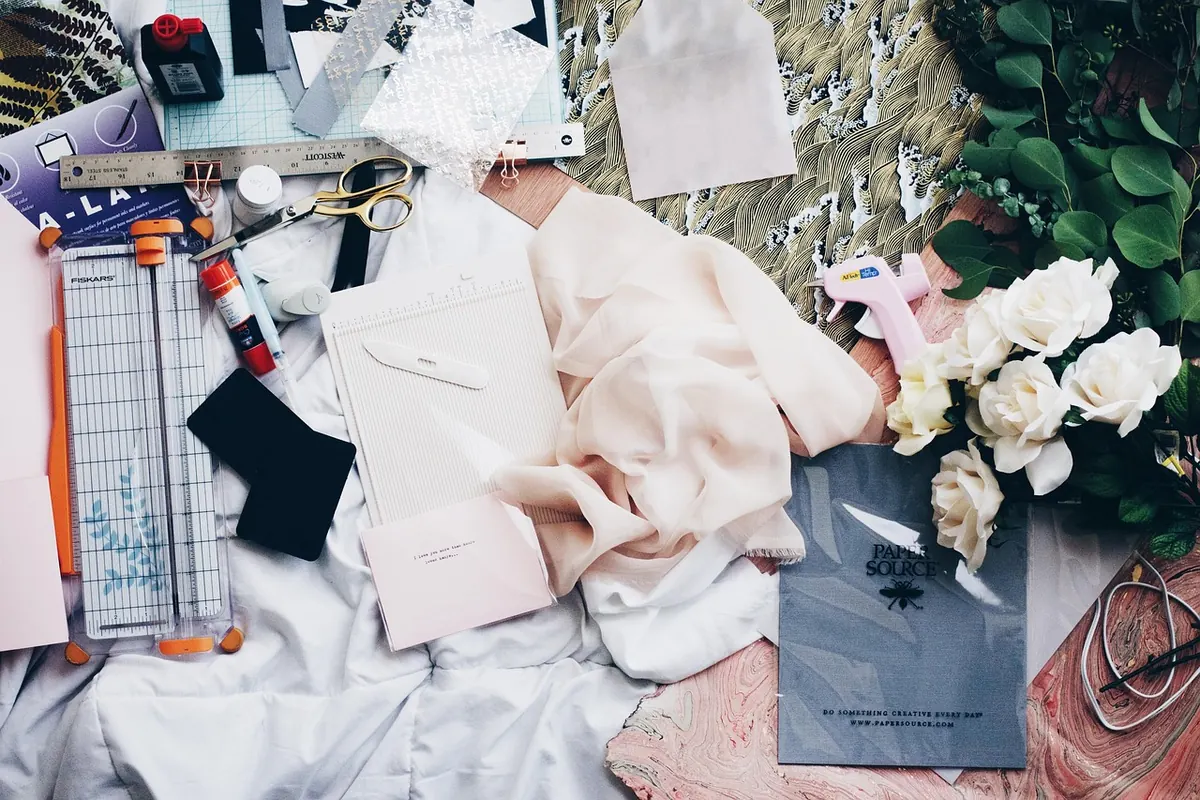
You do not need a studio's worth of equipment. You need these, and they will see you through years of quilting:
- A rotary cutter, 45mm, plus a pack of spare blades
- A self-healing cutting mat, at least A2, ideally larger
- A clear acrylic ruler, roughly 15cm x 60cm, with grid lines
- A quarter-inch presser foot for your machine
- A walking foot for straight-line quilting
- Fine glass-headed pins or quilting clips
- A seam ripper, a small pair of sharp scissors, and a Hera marker or chalk pencil
- An iron you are happy to use next to your sewing table
Two habits matter more than any tool. Press seams as you go, rather than ironing them back and forth, and measure your seam allowance on a scrap of fabric before you start cutting into your good cloth. A quarter-inch seam that is really three-eighths will throw out every block in the quilt.
Before you cut into anything
Make one test block from scraps before you commit to the full quilt. It will tell you whether your seam allowance is accurate, whether your fabric choices work side by side, and whether your wadding and thread combination behaves under the needle. It takes an evening and saves weeks.
Then cut, sew, and accept that the first quilt is a learning piece. Choose fabric you like enough to live with, keep the design simple — squares and rectangles are perfectly respectable — and let the next one be the ambitious one.
Photo: bluemorphos / Pixabay
Sewing with UK Charity Shop Finds: A Checklist for Upcycling Second-Hand Fabric
How to source, wash, unpick and store second-hand clothes and textiles from UK charity shops so they...
PDF Sewing Patterns vs Paper Patterns: Which Is Better for UK Sewists?
Weigh up cost, printing, storage, sizing and ease of use to decide whether PDF or paper sewing patterns...
About Us